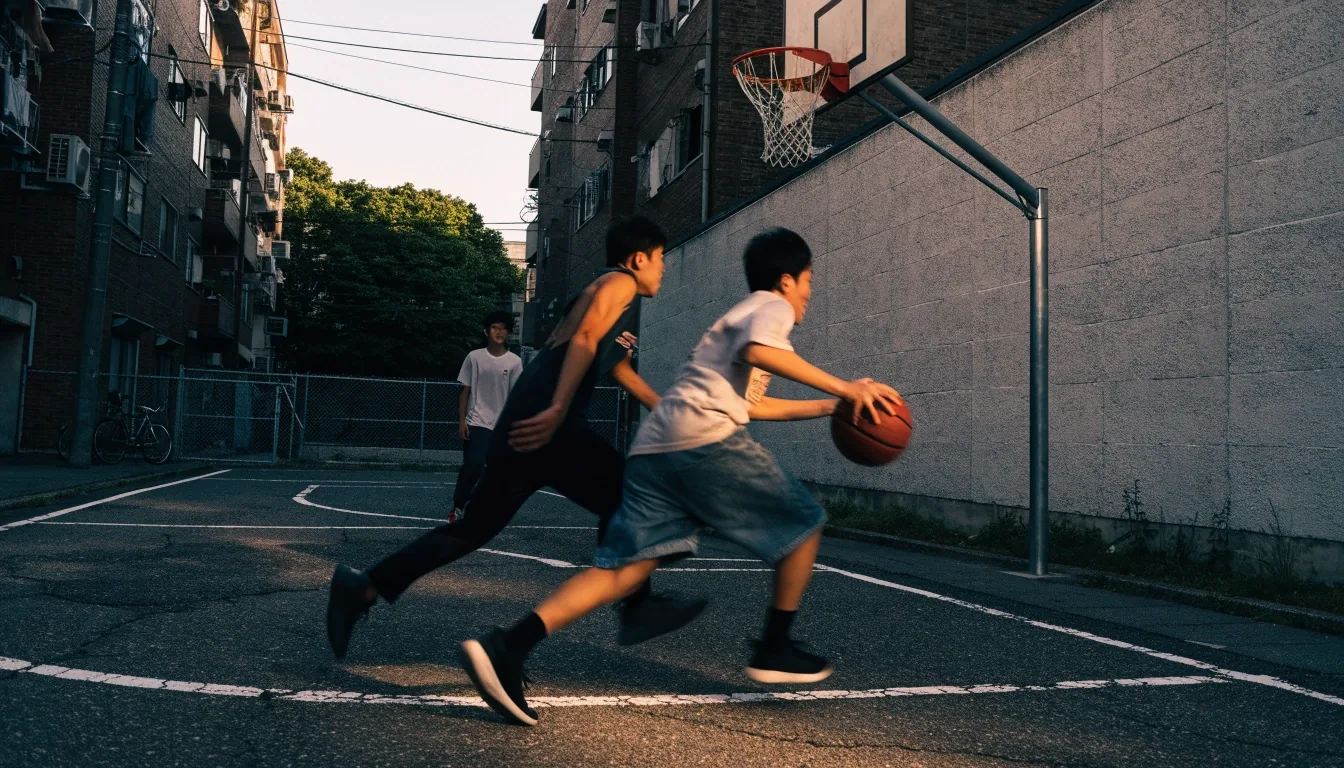
School and street basketball in Japan
School Clubs and Street Basketball Compared
Japan's school basketball clubs and its street game are usually discussed separately. In practice they overlap constantly, and understanding how they connect is the clearest way to see how players actually develop outside the professional system.
Two circuits, one pipeline
If you follow local grassroots basketball in Japan, you run into two institutions doing related work side by side: the club that belongs to a school, and the club that draws its players from several schools. Both sit under the same youth development umbrella, but they train on different calendars, enter different competitions, and ask a young player for different commitments.
This piece follows that split from elementary school through the high school championship, then sets it against the street game that runs alongside both. There is no ranking at the end. The useful question is what each setting prepares a player for — and where the gaps show up on a Saturday afternoon match you have never seen before.
The overlap
School drills and street runs build different players from the same kid.
What an elementary school club does
Many schools in Japan run basketball clubs at elementary level, and the emphasis is on basic skills: dribbling, passing and shooting form rather than results.
A 2025 study describes these clubs as an early entry point into basketball development, sitting alongside regional clubs in the broader youth ecosystem. Sessions tend to be repetitive and structured, which is the point. Habits built here show up years later.
-
Focus
Repetition over scorelines. Form is corrected before a child is asked to compete.
-
Training load
Short, frequent sessions inside the school timetable rather than long weekend blocks.
-
Entry point
One of the earliest formal settings a child meets basketball in, alongside a regional club.
-
What carries forward
Footwork, hand position and the patience for a drill repeated until it stops needing thought.
For parents reading this for the first time: the point of the elementary session is not to identify talent early. It is to make the basics boring enough that a player stops thinking about them.
The school club and the regional club
These are two different institutions doing related work. A school club belongs to the school, trains within its schedule and competes in school competitions. A regional club draws players from multiple schools, trains outside school hours and enters club competition. A player might do both. When people ask why Japan's development system looks unusual compared with Britain's, this split is often the answer.
Belongs to the school
School club
- Trains inside the school schedule, on school premises.
- Enters school competitions, including the high school championship track.
- Consistency comes for free — the player is already at school.
- Competitive exposure is limited to the schools in the draw.
Draws from many schools
Regional club
- Trains outside school hours, often in a shared community venue.
- Enters club competition and regional sports leagues across age bands.
- Players arrive from several neighbouring schools, so the standard varies more.
- Commitment is on the family: travel, fees, weekends given up.
A player can run both at once, and plenty do in the middle school years. What that costs is time. The two calendars do not coordinate themselves, and a family usually ends up choosing which one to protect when a clash lands on the same weekend. Community sports fixtures published by the prefectural associations are the usual place to check before that happens.
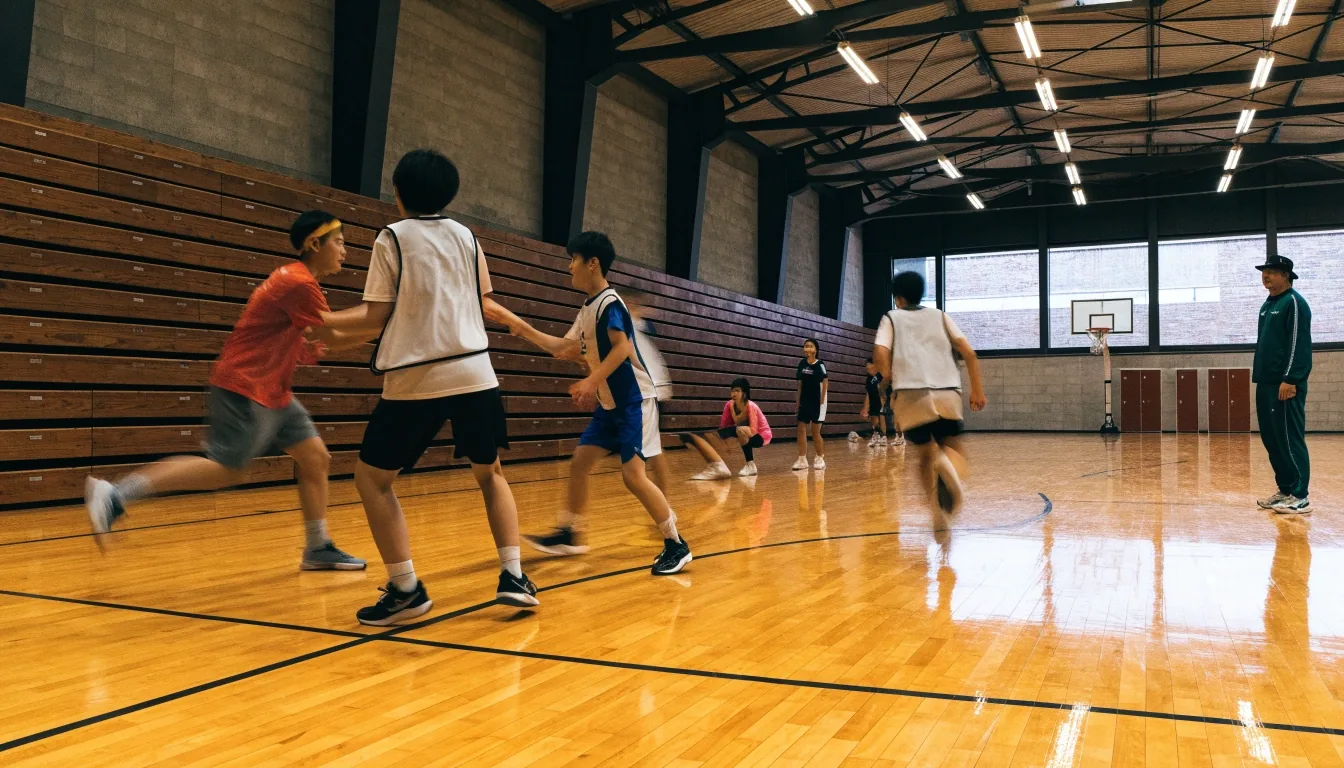
Training venues inside schools
Schools double as training venues in urban Japan, which makes the boundary between education and sport thinner than it looks from outside.
Shibuya Education Academy in Tokyo was named as the site of the first NBA Basketball School Japan, a concrete example of school-linked training infrastructure hosting organized youth instruction. The lesson isn't about the programme's name. It's that an existing school setting can absorb structured coaching without much friction.
That matters for anyone comparing systems. In the British regional basketball model, a youth session usually needs a hired hall, a club committee and a venue slot fought for against other sports. In the Japanese school setting, the floor, the changing rooms and the after-school window already exist. The infrastructure question is largely answered before the coaching question is asked.
Regional fixtures and schedulesStreet basketball as the informal half
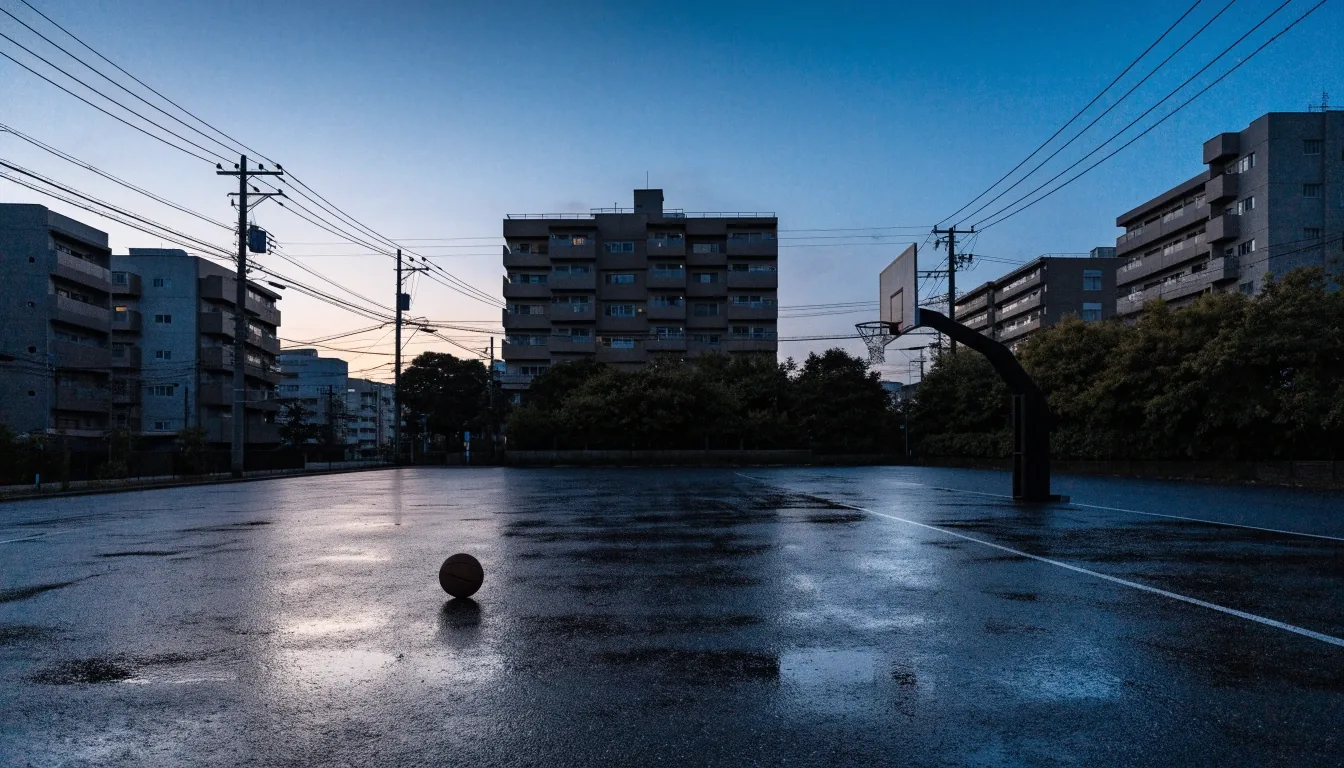
Street basketball runs without a club, a referee or a calendar. Players turn up, pick teams, and play.
A lot of what gets drilled in a school session gets tested here under pressure and with no instruction. The two aren't in competition. Street play is where a player finds out which of their trained habits actually hold up against someone they've never met.
In a street run, nobody tells you when to shoot. You either read the gap or the possession ends.
That is why local grassroots basketball writing tends to treat the street run as a real development environment rather than a pastime. It also explains why some players who look ordinary in a structured session become a different problem to guard once the session stops and the game starts.
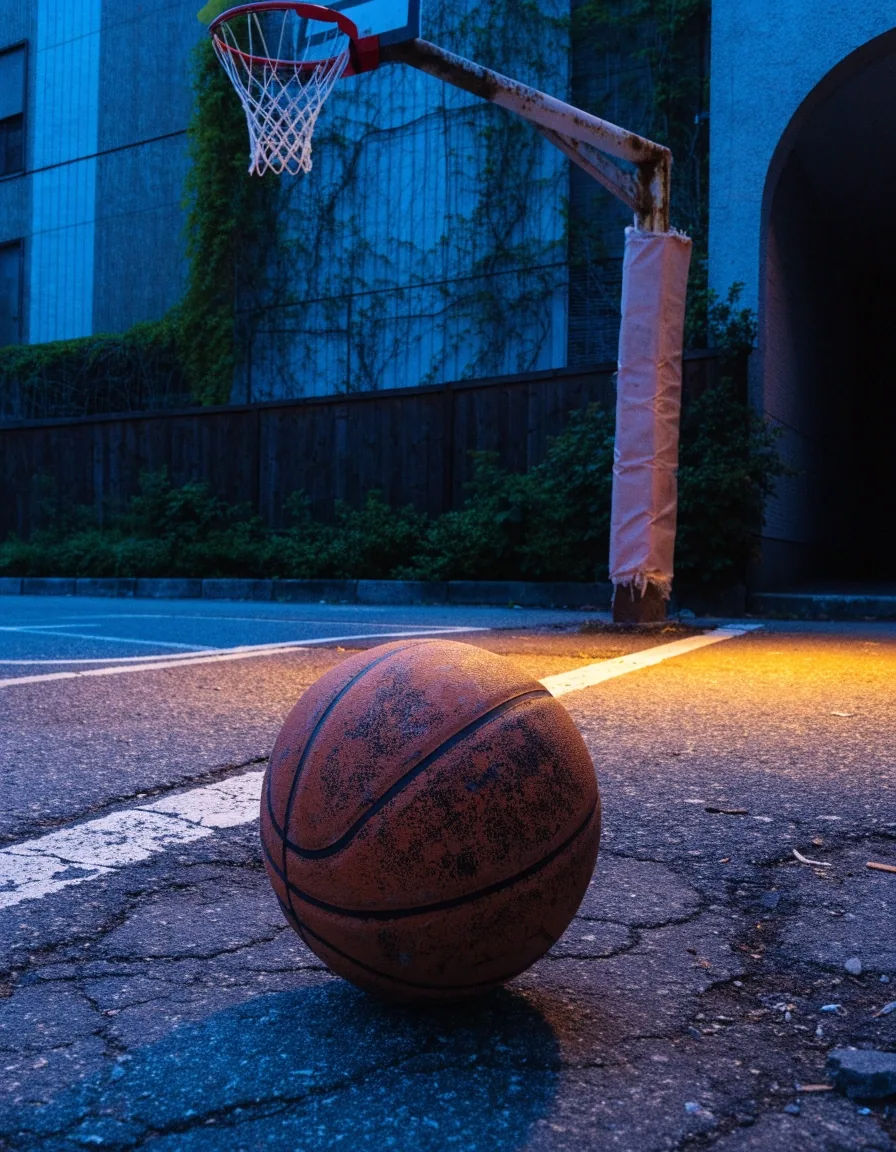
A neighbourhood court in Tokyo: no booking, no referee, no clock. Whoever is there plays.
Skills that transfer, and skills that don't
Between school drills and street games, a few things carry cleanly: ball handling under pressure, court awareness, and the willingness to take a shot without being told to. Others don't. Structured sessions rarely prepare a player for the pace and improvisation of an unorganized game, and street habits rarely survive a coach's demand for a specific play. Good players learn to switch between the two modes.
Travels between both settings
-
Ball handling under pressure
A drill teaches the move; a defender you have never faced decides whether it works.
-
Court awareness
Knowing where the next pass is before the ball arrives holds up in any format.
-
Shooting without instruction
Taking the open look because it is there, not because a coach called a number.
Stays inside one setting
-
Set plays
Only useful if the other four players know the same call — rare in a pick-up run.
-
Playing to a whistle
Street games don't stop, so a habit of waiting for the call costs a possession.
-
Isolation one-on-one habits
Effective in a park, less so when a coach wants the ball moved in three seconds.
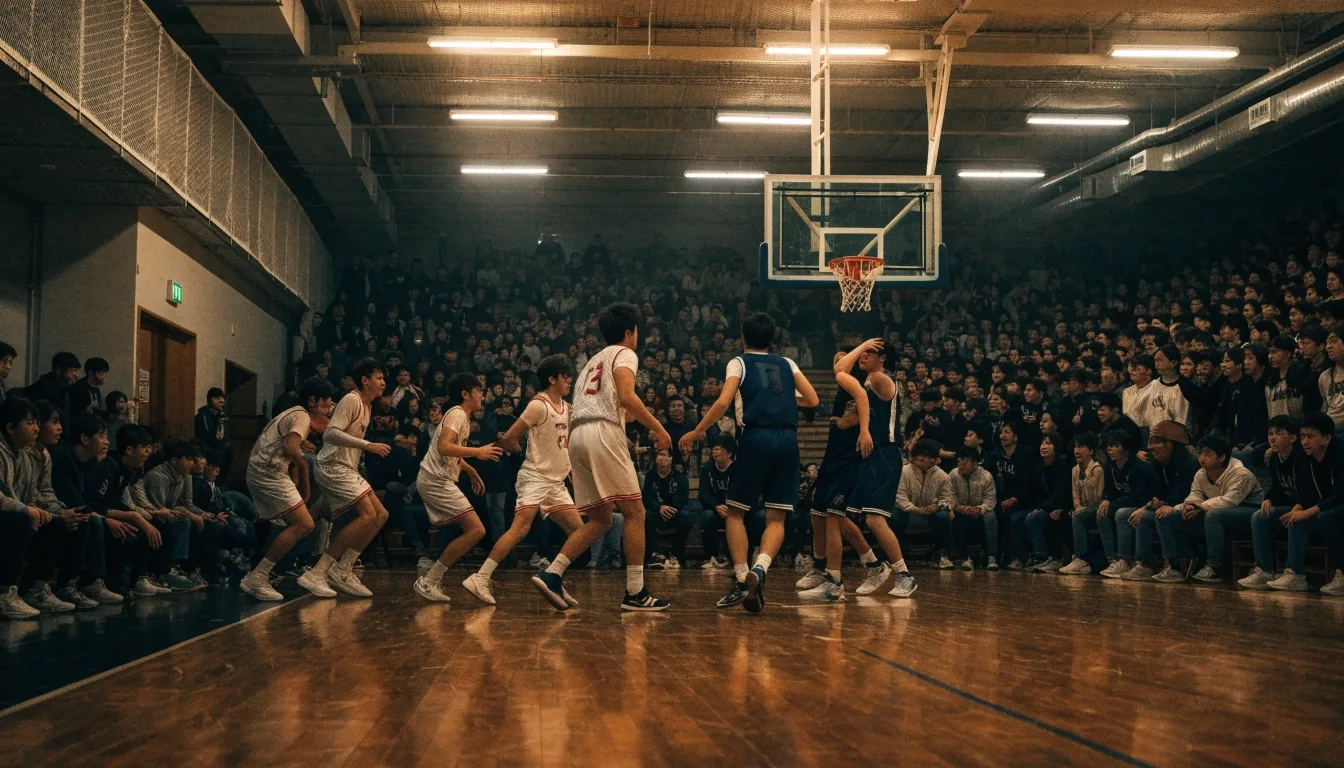
The school-based track
By high school, one programme carries the season.
High school and the competitive step up
By high school, school competition carries real weight in Japan, and club players often narrow toward one programme rather than splitting their time. The high school championship sits at the top of that school-based track. It's a demanding step, and it's where the school system's strengths and limits both show. Development here is deep but narrow compared with a club-first system.
The narrowing is deliberate. Three years of training with the same teammates, the same coach and the same game model produces a cohesion you rarely see in a squad assembled from a wider catchment each season. The trade is exposure: a player who meets only the schools in their bracket sees fewer unfamiliar styles of play than a club player rotating through regional sports leagues.
A different starting point
What Britain does differently
British youth basketball leans more heavily on clubs than schools. A player might join a local club that competes in a city league, then progress through regional divisions toward the National Basketball League structure. School sport exists, but it doesn't carry the same development burden. That difference shapes everything downstream, including where a talented 14-year-old ends up training.
Reading British regional basketball from Japan, the club structure looks more flexible and more fragile at the same time. A player can move between clubs when their level changes, which the school track does not really allow. But the club only exists while volunteers keep running it, and a club folding takes the pathway with it. Anyone following amateur sports updates from either country ends up watching that fragility as much as the results.
Where the two systems differ most
- Main setting
- Japan: the school. Britain: the community club.
- Moving level
- A club player can switch clubs; a school player usually stays with the programme.
- Who carries the cost
- The school absorbs it in Japan. In Britain the family and the club volunteers do.
- Competitive spread
- Club divisions bring wider opposition earlier; the school bracket is narrower.
Watching both systems without ranking them
Neither model is simply better. A school-centred system gives young players consistent access and strong fundamentals. A club-centred one gives committed players more competitive exposure earlier. The interesting question isn't which wins, but what each system produces that the other struggles to. We'll keep writing about that boundary as long as it stays useful.
If you are following a young player, the practical version of this is simple. Find out what your local setting actually trains, how often, and who decides the next step. Then watch a street run and see which of those habits survive contact with a stranger. Our grassroots sports review pieces follow the same approach: describe what is there, compare it honestly, and leave the ranking to whoever is watching.
Questions we get about school basketball training
Short answers to what readers ask most often when they are trying to place a young player in the right setting.
Do players do both the school club and a regional club?
Some do, especially in the middle school years when both calendars still fit. It stops being sustainable once the school training load grows and the weekend fixtures of the two settings start colliding. Families usually make the call then rather than earlier.
Is school basketball training enough on its own?
For fundamentals and consistent access, it holds up well. For variety of opposition, it depends on the schools in the draw that season. A player who only ever meets the same handful of programmes learns fewer ways to solve a game.
Where does street basketball fit into this?
Alongside, not against. The street run is where trained habits meet an opponent who has not read the same drill book. It is informal, unrefereed and has no calendar, which is exactly what makes it useful as a check rather than as a replacement.
How do I find local fixtures for a young player?
Community sports fixtures are usually published by the prefectural or regional association running that competition, and school draws are posted by the school itself. Our schedules section collects the regional picture and is the easiest place to start: regional fixtures and schedules.
Why compare Japan and Britain at all?
Because the two systems make opposite bets about where a young player should spend their hours, and both produce players. Seeing the trade clearly is more useful to a parent or a coach than deciding which country got it right.
Continue with the wider grassroots picture
School and street basketball sit inside a bigger map of amateur leagues, regional competition and local sports history. If this piece was the entry point, the next useful steps are the league structures that amateur basketball JP actually runs on, and the history that explains why the school track carries the weight it does.